Development of lightweight radiation shielding material for spacecraft and deep space habitat internal protection
 |
Rövid név |
- |
| Azonosító |
ESA RFP/3-18846/25/NL/PA/pt |
| Kezdete |
28/01/2026 |
| Vége |
27/01/2027 |
| Szakmai vezető az Atomkiban |
|
In this work, we aim to increase the efficiency of radiation shielding for the interiors of spacecraft (Orion), space stations (Lunar Orbital Platform Gateway) and deep space habitats for manned missions to the Moon and Mars. We aim to increase the efficiency by minimizing the mass of the applied shielding for the radiation exposures occurring during a given mission and the required level of protection against well-defined radiation damage (measurable and well-estimated by model calculations). To achieve this, we aim to optimize the material characteristics (chemical composition, material structure forms, layering and geometry) of various radiation shielding materials. ATOMKI participates in the work primarily through model calculations and accelerator testing.
Partners of the consortium: Genevation Aircraft Ltd, Thales Alenia Space, University of Debrecen, HUN-REN ATOMKI
Total budget: 300,000 EUR, from which ATOMKI received: 60,000 EUR
|
Precision study of nuclear reactions of astrophysical interest with novel techniques
 |
Rövid név |
- |
| Azonosító |
NKFIH ADVANCED 152233 |
| Kezdete |
01/01/2026 |
| Vége |
31/12/2029 |
| Szakmai vezető az Atomkiban |
|
One of humanity's enduring objectives has been to comprehend the Sun, the star that provides our planet with energy. We now understand that stars generate energy through nuclear fusion reactions. Today astronomical observations have achieved unparalleled precision, however, the predictions made by the Standard Solar Model, which links the Sun's properties to observable quantities, is not precise enough.
In order to achieve the desired level of accuracy, it is essential to conduct experiments measuring the most significant nuclear reactions, such as the proton capture on nitrogen or the fusion of the two helium isotope. The objective of this project is to measure these reactions with high precision, taking advantage of the rapid development of experimental techniques and the applicability of new methods. The experiments will primarily utilise Hungary's state-of-the-art particle accelerator (the Atomki Tandetron) and, in international collaborations, unique underground accelerators.
Budget: 150 MHUF
|
Essential (alpha,neutron) reaction cross section measurements for nuclear technology and nuclear physics applications
 |
Rövid név |
- |
| Azonosító |
TKCS-2024/56 |
| Kezdete |
01/02/2025 |
| Vége |
31/12/2027 |
| Szakmai vezető az Atomkiban |
|
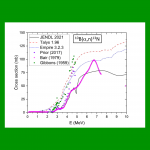
Accurate nuclear reaction data are essential for 21st century nuclear technology and scientific applications. In 2021, experts from the International Atomic Energy Agency reviewed the available experimental and theoretical information on (a,n) reactions and – since they are insufficient for many modern applications – made proposals for further experiments in the form of a so-called “white paper” (further details: INDC(NDS)-0836). Within the framework of the TKCS-2024/56 project, we measure cross sections of several nuclear reactions with high accuracy in the relevant energy range using experimental techniques that have not been used before.
- Applicant: HUN-REN ATOMKI
- Co-applicant: Budapest University of Technology and Economics
- Budget for years 2025-27: 248.9 MHUF
|
EUROpean Laboratories for Accelerator Based Science
 |
Rövid név |
EURO-LABS |
| Azonosító |
HORIZON-INFRA-2021-SERV-01-07, Grant agreement No. 101057511 |
| Kezdete |
01/09/2022 |
| Vége |
31/08/2026 |
| Weboldal |
|
| Szakmai vezető az Atomkiban |
|
EURO-LABS is a network of 33 research and academic institutions from 18 European and non-European countries, involving 47 research infrastructures in the nuclear physics, accelerators and detectors pillars. Within this large network, EURO-LABS will ensure diversity and actively support researchers from different nationalities, gender, age, grade and variety of professional expertise.
The participation of ATOMKI in EURO-LABS is realized through the CLEAR cluster. CLEAR is a consortium of three installations:
- ATOMKI in Debrecen (support: 93,125.00 EUR),
- CNA in Seville (357,506.25 EUR) and
- IST in Lisbon (65,000.00)
offering access to stable-ion and neutron beams. The consortium has a common Program Advisory Committee. The homepage of CLEAR contains all the rules of the Transnational Access services.
Accelerators offered by ATOMKI:
|
Nuclear technology research and development based on particle accelerators
 |
Rövid név |
- |
| Azonosító |
TKP2021-NKTA-42 |
| Kezdete |
01/01/2022 |
| Vége |
31/12/2025 |
| Weboldal |
|
| Szakmai vezető az Atomkiban |
|
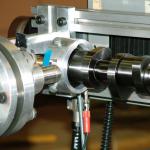
- The project involves the applications of nuclear technology based on the data collected through the fundamental research, that's why it is indispensable to determine nuclear structure as well as nuclear reaction data by using experimental technique.
- One of the important area of the nuclear technology is the production of radioisotopes, on the one hand as a radiation source, on the other hand as an additive, as well as in the volume of the material to be investigated. These tracers can then applied for following processes in a rapid and economic way.
- Production of new surface layers by irradiation and investigation of those, elaboration of irradiation and measurement methods for wear measurement of materials of novel constitution and structure. Development of novel nuclear particle detectors based on nanotechnology.
- Development of accelerator based production on therapeutic and diagnostic radionuclides, elaboration of their radiochemical separation. Development of theranostic radioisotopes and targeted radionuclide therapy.
Budget: 1.191.526.000 HUF
|
Laser-plasma based source 3D tomography for cargo inspection
 |
Rövid név |
MULTISCAN 3D |
| Azonosító |
H2020-SU-SEC-2020 RIA - Grant Agreement ID 101020100 |
| Kezdete |
01/09/2021 |
| Vége |
31/03/2025 |
| Weboldal |
|
| Szakmai vezető az Atomkiban |
|
The consortium of 18 partners from 9 countries aims at development of a new portal monitor system and a 3D tomography method that will be suitable for fast and reliable screening of bulk cargo and vehicles. The system must identify hidden persons and hidden illicit and dangerous materials (nuclear materials, explosives, weapons, drugs, contrabands). The screening will be done employing mainly X-ray photons emitted by laser based radiation sources. Advanced methods will be developed for detection of the nuclear particles that leak the screened volume and for evaluation of the large amount of the data measured by the particle detectors. The project helps the efficient management of national and European Union level security, law enforcement and custom problems.
ATOMKI participates in developments of methods for detection of the neutrons emitted by the laser based radiation sources.
Net EU contribution: 6 989 608.75 EUR; part of ATOMKI: 56 062.50 EUR.
|
Chemical Elements as Tracers of the Evolution of the Cosmos – Infrastructures for Nuclear Astrophysics
 |
Rövid név |
ChETEC-INFRA |
| Azonosító |
101008324 / Call ID: H2020-INFRAIA-2020-1 |
| Kezdete |
01/05/2021 |
| Vége |
31/10/2025 |
| Weboldal |
|
| Szakmai vezető az Atomkiban |
|
Nuclear astrophysics studies the origin of the chemical elements: from the Big Bang to stellar burning and to neutron star mergers. ChETEC-INFRA project networks the three types of infrastructures that, together, provide the capabilities needed for this quest: (1) astronuclear laboratories supply reaction data, (2) supercomputer facilities perform stellar structure and nucleosynthesis computations, and (3) telescopes and mass spectrometers collect elemental and isotopic abundance data.
The consortium includes 32 partners from all around Europe and is lead by HZDR, Germany. Beside the joint research activities, the project supports transnational access to particle accelerators, telescopes and supercomputers. It also supports outreach and scientific schools for the younger generations.
Atomki lead the work package about gas target development and provide transnational access to the cyclotron accelerator.
The total budget of this project is 5 MEUR from which Atomki receives 104 kEUR.
|
Exploration and development of a novel control software framework for research infrastructures
 |
Rövid név |
eMFC (e-Modelling Framework for Control systems) |
| Azonosító |
GINOP-2.2.1-15-2016-00012 |
| Kezdete |
01/12/2016 |
| Vége |
28/02/2021 |
| Weboldal |
|
| Szakmai vezető az Atomkiban |
|
In the frame of this project, research infrastructure units of Atomki are set into a control software framework thus establishing a remotely controllable virtual laboratory. The aim of the system integration is to create a complex infrastructure suitable to make radiobiological and radiation hardening measurements. The subsystems involved in the integration: cyclotron accelerator - neutron source and vertical beam-end for isotope production, tandetron accelerator, Van de Graaff accelerator, Co-60 source, MiniPET-3 small animal Positron Emission Tomograph and radiochemical laboratory, ESCA (Electron Spectrometer for Chemical Applications), MGGL (Matra Gravitational and Geophysical Laboratory), ECR ion source, PEM (Physical Environment Monitoring) system.
Leader of consortium:
- Evopro NPA Kft, former Evopro Systems Engineering Kft (support: 398.725.723 Ft, 57%)
Members of consortium:
- Atomki (support: 185.500.010 Ft, 100%)
- Biological Research Centre (support: 145.561.008 Ft, 100%)
- University of Szeged (support: 239.834.823 Ft, 100%)
|
Integrated Platform for the European Research Infrastructure ON Culture Heritage
 |
Rövid név |
IPERION CH |
| Azonosító |
|
| Kezdete |
01/05/2015 |
| Vége |
31/10/2019 |
| Weboldal |
|
| Szakmai vezető az Atomkiban |
|
The H2020 IPERION CH project aims to establish a unique pan-European infrastructure in Heritage Science by integrating facilities at research centres, universities and museums. The consortium offers access to instruments, methodologies and data for advancing knowledge and innovation in the conservation and restoration of cultural heritage through three complementary platforms, ARCHLAB, MOLAB, FIXLAB. Calls are published twice a year.
FIXLAB B1: MTA Atomki – Laboratory of Ion Beam Applications
Through determining the concentration and distribution of elements, ion beam analytical techniques can give information on provenance, authenticity, production technology, and degradation due to environmental effects of art and archaeological objects. They also contribute to the elaboration of conservation technologies. Besides in-vacuum measurements with high lateral resolution, an external micro-beam set-up is also available for artefacts of bigger sizes or sensitive nature.
Next deadline: 28 February 2018
Application form
|
COMPLEX INNOVATION - Health industry network for efficiency improvement
 |
Rövid név |
COMPLEX INNOVATION |
| Azonosító |
TÁMOP-4.2.6-15/1-2015-0001 |
| Kezdete |
01/05/2015 |
| Vége |
30/11/2015 |
| Weboldal |
|
| Szakmai vezető az Atomkiban |
|
In the frame of this project, MTA Atomki improves PET (Positron Emission Tomography) methods for medical and research purpose, based on the self-developed small animal PET camera.
Tasks:
- Data aquisition protocols for cell culture and plant labelling, for functional food studies, for various samples and for small animal studies with the small animal PET camera.
- Synthesis protocols for compounds labelled with C-11 and F-18 positron emitter radioisotopes.
- Cell cultures and functional food studies using radioactive isotopes.
- Application of physics, nuclear physics and biophysics in the development of modern biotechnological methods.
- Modelling of vascular system with flow network, studies of cell protein synthesis using Boolean network model.
- Test measurements with the small animal PET camera and Monte-Carlo simulation.
|
1 – 10 mutatva 12 elemből
 Magyar